Can you construct in winter? A scientific guide to garage floor coating in low-temperature environments

With the arrival of winter in the northern United States, low temperatures create significant challenges for garage floor coating installation. Traditional flooring materials often face delayed curing, reduced adhesion, and even surface blistering or cracking under cold conditions. Fortunately, modern garage floor coating solutions, designed with low-temperature formulas and advanced application techniques, make winter installation reliable and efficient, offering homeowners and professionals a practical solution for maintaining durable, high-gloss floors even during harsh winter months.
Table of Contents
Chemical challenges and formulation adaptability in low-temperature environments
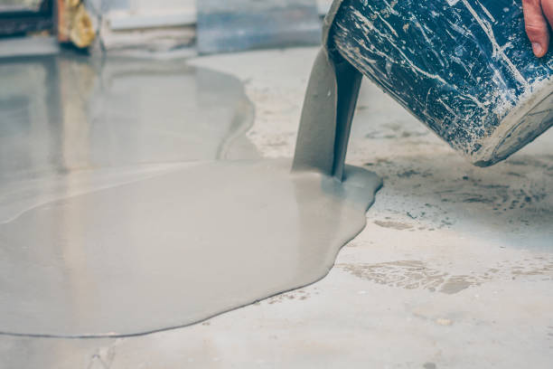
In environments below 10°C, the chemical reaction rate of ordinary epoxy or polyurethane floor coatings slows significantly. Water evaporation is slow, and the curing process is prolonged, resulting in reduced coating adhesion and the formation of bubbles or cracks on the surface. High-performance garage floor coatings typically use the following formulation adjustments to meet the needs of the northern winter market:
- Increase the proportion of low-temperature curing agent to speed up the cross-linking reaction;
- Use low-viscosity resin to improve coating fluidity, allowing it to spread smoothly even in cold environments;
- Antifreeze agents or low-temperature activated additives are introduced to ensure that the coating can still form a dense protective layer under 0–5°C conditions.
Real-world cases show that in some northern garage construction projects, even when applying specialized formulas in an environment of 2°C, initial curing can be completed within 24 hours and good adhesion can be maintained. This means that choosing a garage floor coating suitable for low temperatures is the primary strategy for winter construction.
Preparation before construction: temperature, humidity and substrate treatment
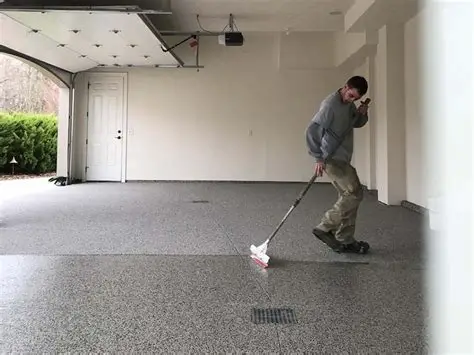
formula butformula butLow-temperature construction not only tests the coating formula, but also places higher demands on substrate preparation. Concrete substrates are prone to absorb moisture or slightly frost at low temperatures. If applied directly, it is easy to cause the coating to peel off or bubble. Therefore, before construction, you need to:
- ::Temperature-controlled garage environment : Use portable heaters or temporary partitions to maintain the construction area at 10–15°C to avoid exposing materials to cold air;
- ::Humidity monitoring : Keep relative humidity below 60% to prevent water vapor from affecting coating adhesion;
- Dry Substrate inspection and treatment: Ensure that the concrete surface is dry and free of dust and oil, repair any areas with minor cracks, and use a special primer to enhance adhesion if necessary.
. Practice has shown that the environment and substrate preparation before winter construction are key links in ensuring the performance of garage floor coating.
Drying time and construction strategy adjustment
Winter and extended drying times are common in low-temperature conditions. While standard garage floor coatings dry in 4–6 hours at 20°C, they may take 12–24 hours at temperatures around 5°C in northern winter and fully cure in 3–5 days. High-performance garage floor coatings shorten drying cycles at low temperatures through improved resin and curing agent combinations:
- touch. Initial drying stage: It usually takes 6–12 hours for the product to become non-sticky to the touch;
- a low-temperature Walking stage: Can withstand light walking in a low-temperature environment for 48–72 hours;
- Full load stage: It is recommended to park the vehicle after 5–7 days.
cured so In order to ensure uniform coating, a segmented construction strategy is usually adopted during winter construction: the base layer is laid first, and then the surface layer is applied after it is fully cured so as to avoid cracks caused by temperature difference stress caused by large-scale construction at one time.
-temperature Construction skills: improve the success rate of low-temperature construction
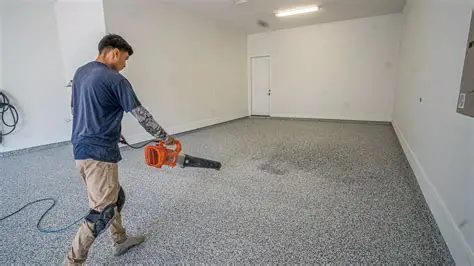
, Even with optimized formulas, low-temperature application still requires careful attention to operational details:
- Mix thoroughly: At low temperatures, the viscosity of the resin and curing agent increases, and sufficient stirring ensures a uniform chemical reaction.
- Small batch mixing: Control the amount of each mix to avoid premature and uneven curing caused by prolonged exposure to cold air;
- Use a roller or self-leveling scraper: Choose the tool according to the type of coating. High-gloss self-leveling coating can reduce air inclusions and improve the mirror effect.
- Sectional heating: If the garage is large, local heating or mobile heaters can be used to ensure that the coating maintains the appropriate temperature during the spreading process.
Combined with real-world application feedback, following these tips can significantly reduce common winter construction issues such as bubbles, cracks, or uneven surfaces.
Post-maintenance and gloss retention
After winter construction, the garage floor coating needs scientific maintenance to ensure durability and visual effects:
- Avoid immediate cleaning and use a neutral detergent only after the coating is fully cured.
- Prevent ice, snow, and melted salt water from contacting the surface for a long time. Use protective mats or short-term covers when necessary.
- Check the coating surface regularly and polish or repair minor scratches to extend its service life.
Practical experience shows that if the coating is correctly applied at low temperatures and scientifically maintained, its glossiness and wear resistance can last for many years, providing long-term protection for northern garages.
Summarize
Garage floor coatings are no longer off-limits in northern winter. Through low-temperature-adapted formulations, pre-construction environmental control, optimal drying cycles, and professional application techniques, garage floors can still achieve a high gloss, smooth, and wear-resistant finish. Scientific application not only ensures floor performance but also enhances visual appeal and long-term value.


