
Table of Contents
When you first see a contractor pull out a bag of brightly colored vinyl flakes/chips, your first reaction is often, “Oh, these are for choosing colors.”
This is normal. In most people’s minds, these confetti-like flakes are merely meant to make a dull cement floor look like granite or terrazzo.
“cosmetics.” But as an observer who has worked in this industry for many years, I want to tell you a seriously underestimated fact: in high-performance garage floor coating systems, these flakes are not just “cosmetics”; they are actually the “muscle” and “armor” of the flooring system.
If you think that applying thin layers is just for aesthetics, then you may be missing the true core value of the vinyl chip flooring system. Today, we won’t talk about aesthetics, only engineering.
The qualitative leap from “coatings” to “composite panels”
full broadcast. To understand the true function of Flakes, we must first distinguish between two concepts: partial broadcast and full broadcast.
DIY kits on the market usually only provide a small amount of thin flakes, allowing you to sprinkle them like pepper.
But in professional industry standards, we strive for a saturated application that “doesn’t expose the base.”
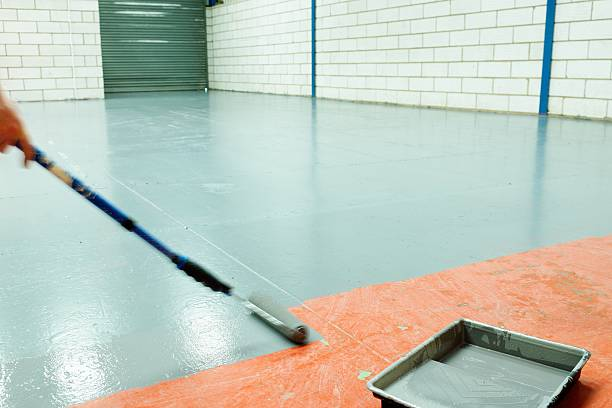
When you completely cover the damp primer with vinyl film until it refuses to absorb, a wonderful physical change occurs. You are no longer just applying a coat of paint to the floor; you are actually pouring on-site a “composite carpet” made of resin and PVC vinyl film.
full broadcast This directly leads to an increase in physical thickness. A standard garage floor coating is only 10-15 mils thick, while a vinyl chip flooring system with a full broadcast layer can easily double the total thickness to 30-40 mils.
This extra thickness forms the first line of defense against tire meltdowns, heavy jack pressure, and impacts from dropped tools.
The Art of Hiding Dirt on Garage Floor
Let’s face a harsh reality: solid-color, high-gloss epoxy flooring is like a mirror.
While a pure white or pure gray floor may look incredibly high-tech when freshly installed, it’s also the most “honest.”
Even a single hair, a speck of sawdust, a small pebble brought in by a tire, or just a watermark left by humid summer air will be magnified on a solid-color floor. For car owners with obsessive-compulsive tendencies, a solid-color floor is a nightmare.
This is where the benefits of epoxy flakes become fully apparent.
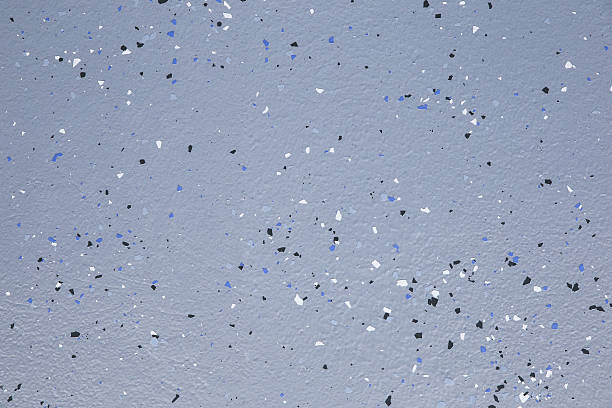
By mixing thin sheets of different sizes (1/4 inch or 1/16 inch) and colors, this “visual noise” cleverly deceives the human eye because it creates a disordered, complex visual texture on the ground.
It disrupts visual continuity, making dust, dirt, and minor scratches appear to “disappear.”
This doesn’t mean the floor won’t get dirty, but rather that it allows you to have a garage that looks neat and presentable for one day before your weekly deep cleaning.
For busy families, this feature of hiding dirt on the garage floor actually saves you a lot of cleaning anxiety and time.
Passive anti-slip and texture building
Slip-and-fall accidents often occur after vehicles have returned to their parking spaces during rainy or snowy weather.
Pure epoxy resin, once cured, has a surface as smooth as ice; however, its coefficient of friction drops sharply when it comes into contact with water.
While we typically recommend adding specialized anti-slip garage coating additives (such as alumina or polymer beads), the vinyl film itself creates a macroscopic anti-slip base.
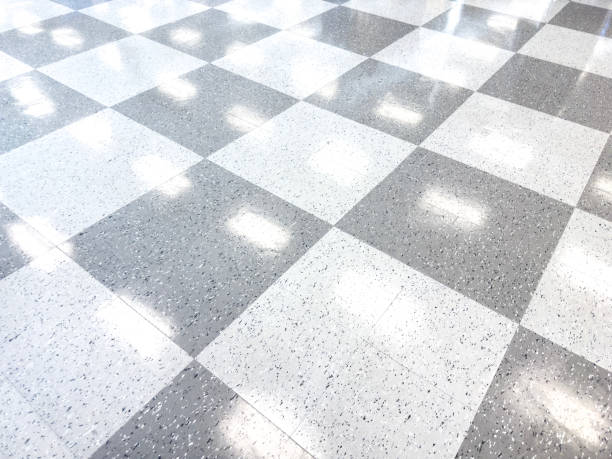
In a full-spreading system, the flakes are stacked, and although they are eventually sealed with a clear coat, the natural undulations created by the stacking of the flakes are preserved, forming a gentle texture similar to “orange peel.”
- No thin film: The ground is flat, a water film forms easily, and it is extremely slippery.
- Thin sheets: The microscopic unevenness of the surface disrupts the tension of the continuous water film, providing more contact points.
This texture is “passive”—it’s not as rough and hurtful as sandpaper (if you like walking barefoot in the garage), but it’s enough to provide the necessary mechanical grip between the sole and the ground.
Industry Insight: The smartest approach is to add a small amount of anti-slip particles when applying a polyaspartic topcoat over the thin film layer. The film provides macroscopic texture, while the particles provide microscopic grip—a two-pronged approach.
UV blocking and substrate protection
Finally, let’s discuss a point that few people mention.
If your base coat is made of epoxy resin, you need to know that epoxy resin has a fatal weakness: it is not resistant to ultraviolet rays. Prolonged exposure to sunlight streaming through a window will cause it to yellow (amber) or even chalk.
In a vinyl chip flooring system, the dense, thin layers actually act as a physical sunblock.
They completely block the underlying epoxy resin, protecting it from direct UV radiation. Combined with a UV-resistant clear topcoat, this structure significantly extends the lifespan of the entire flooring system.
Conclusion
When we re-examine those colorful fragments, please don’t just see them as decorations. They are filler to add thickness, camouflage nets to hide traces of life, safety mats to prevent slipping, and sunscreen to block ultraviolet rays.
A good garage floor coating solution must be a combination of aesthetics and functionality.
Choosing the right flake ratio and application method will result in more than just a beautiful garage; it will be a work of art that truly stands the test of time.
FAQ (Frequently Asked Questions)
Q1: Are full-broadcast flake floorings difficult to clean?
This is a common misconception.
While the vinyl chip flooring system has a textured surface, it’s not rough. This is because a thick, clear topcoat (such as polyaspartic acid ester) is applied over the chip layers, filling in the deep gaps between the chips and leaving only rounded undulations.
This allows mops to glide easily over the surface and prevents water pooling when pressure-washed. Comparatively, it’s easier to clean than a rough, non-slip sand floor.
Q2: Can I use a thin sheet to prevent slipping without using anti-slip additives?
While the benefits of epoxy flakes do include providing some texture, this depends on the thickness of the topcoat.
If the topcoat is applied too thickly, it may completely fill in the texture of the flakes, leaving the surface still slippery.
For safety, especially for drivers living in rainy or snowy areas, we strongly recommend adding professional anti-slip garage coating additives to the topcoat for double protection.
Q3: Since the thin film can hide dirt on the garage floor, what color of thin film is most effective?
Generally, earth tones or rock tones that blend gray, tan, black, and white work best for concealing dirt or debris.
Thin combinations of pure black or pure white will only accentuate dust or debris.
Choosing a primary color scheme that closely matches the color of your local soil is a “cheat code” for keeping your garage visually tidy.


