Five things you must know before installing Garage Floor Coating

Installing a garage floor coating is a solution that can significantly improve the appearance and durability of your garage floor. However, many people may not be adequately prepared for their first installation, leading to some unnecessary problems. Factors such as odor, curing time, and ventilation can all affect the final result. To ensure a smooth garage floor coating installation, this article will help you understand five key points to know before installation, helping you avoid common mistakes and ensuring that the floor coating maintains its beauty and functionality for a long time.
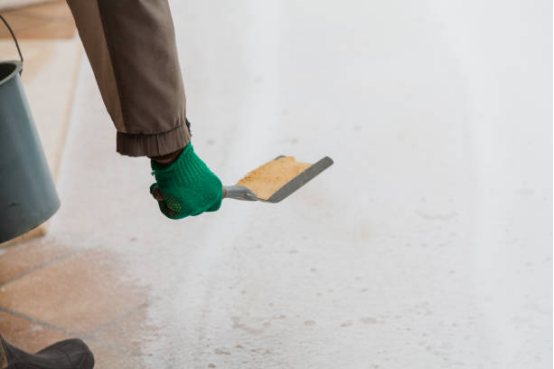
1. Garage floor cleaning and preparation: The first step determines success or failure
Before installing garage floor coating, the most important step is to thoroughly clean the floor. If there is oil, dust, dirt, or any type of grime on the floor, the coating’s adhesion will be significantly reduced, eventually leading to peeling or flaking. Many car owners overlook this, assuming that simply applying the coating is enough. However, untreated stains will hinder the coating from bonding tightly to the floor, thus affecting its durability.
To prepare the garage floor, you can take the following steps:
- Thorough cleaning: Use a strong floor cleaner to remove oil and grease, especially around parking areas. This is essential to ensure the coating adheres firmly.
- Repairing cracks: If there are cracks or potholes in the ground, they should be repaired first. Otherwise, these cracks may become more noticeable as the coating cures and may even cause the coating to peel off.
- Check humidity: Damp floors can affect the adhesion of garage floor coating. Ensure the floor is completely dry before application.
If using an epoxy preparation-type coating, it is also necessary to ensure that the ground has sufficient roughness so that the coating can form a strong mechanical adhesion to the ground.
2. Ventilation: Maintain air circulation to avoid discomfort.
Ventilation is a crucial consideration when installing garage floor coatings. Many coatings, especially epoxy coatings, contain volatile organic compounds (VOCs) and have strong odors. Inadequate ventilation in a garage can cause these odors to accumulate, negatively impacting the health of you and your family.
To effectively solve this problem, the following measures can be taken during installation:
- Keep garage doors open: If possible, keep garage doors or windows open to ensure air circulation.
- Use fans: Placing fans in the garage helps with air circulation and accelerates the evaporation of harmful gases. Especially in enclosed spaces, powerful fans will accelerate the diffusion of these harmful substances, helping to improve air quality.
- Consider an air purifier: If your garage lacks windows or vents, consider using an air purifier. This device effectively removes harmful gases, providing fresher air.
In addition, it is best to avoid high-temperature weather during construction, as an overheated environment will accelerate the drying of the coating and increase the concentration of harmful gases released. Therefore, it is essential to ensure good ventilation in the garage during construction.
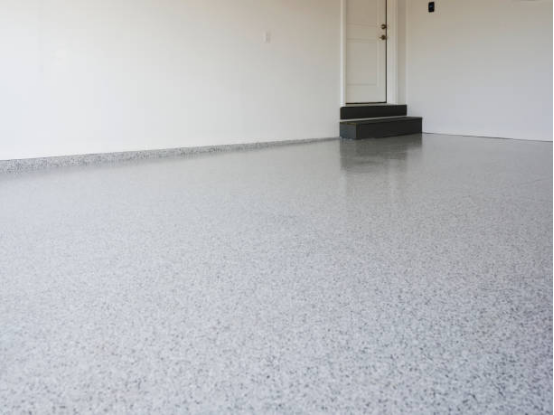
3. Curing time: Allow sufficient drying time for the coating.
Applying garage floor coating is not just a matter of spreading it and finishing immediately—especially with epoxy coatings, where curing time is critical. Generally, most garage floor coatings dry after about 24 hours, but full curing can take longer. The exact curing time depends on the type of coating, so it’s important to follow the manufacturer’s recommendations.
Curing time is influenced by several factors, with the following being particularly important:
- Temperature and humidity: If the garage environment is cold or humid, the curing time of the garage floor coating will be extended. The ideal application temperature is between 15°C and 30°C (60°F to 85°F). Avoid applying the coating in cold or overly humid conditions.
- Phased curing process: Some garage floor coatings may seem usable after initial drying, but they are still curing internally. It’s best to wait at least 72 hours to ensure the coating is fully hardened before using the garage. This not only enhances durability but also ensures the coating can withstand heavy use.
To guarantee optimal performance, avoid entering the garage before the garage floor coating is fully dry, especially avoiding contact with wheels or heavy objects. Only after full curing will the coating provide its maximum abrasion resistance and UV protection.
4. Safety: Necessary protection during chemical coating application
The application of garage floor coating may involve some chemicals, especially when using epoxy resin coatings. Prolonged exposure to these chemicals may have adverse effects on the skin and respiratory tract; therefore, appropriate safety precautions must be taken during application.
During installation, ensure you have the following protective equipment ready:
- Gloves and goggles: The chemicals in the coating can irritate the skin and eyes. Wearing protective gloves and goggles is an effective way to prevent contact with these chemicals.
- Masks or respirators: Wearing a mask or respirator is essential to avoid inhaling volatile organic compounds (VOCs), especially when the coating is thick.
- Avoid contact with wet coating: During installation, ensure that any wet coating exposed to air does not come into direct contact with your skin. The garage should only be used after the coating has fully cured.
In addition, ensure children and pets are kept away from the garage during construction to avoid any undried coating coming into their skin or eyes.
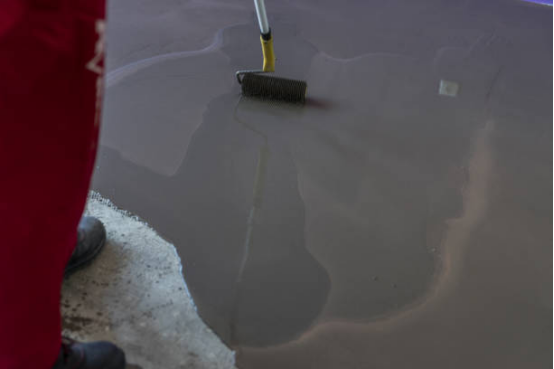
5. Keep the garage clean: Post-construction maintenance and care
The installation of the garage floor coating is not the end of the process. The quality and durability of the coating will be affected by daily use. To ensure the coating maintains its optimal condition for a long time, some post-installation maintenance is necessary:
- Avoid heavy objects: Before the garage floor is fully cured, avoid parking heavy objects or vehicles on the coating to prevent scratches or damage to the coating.
- Regular cleaning: Regularly cleaning the garage floor and keeping it clean not only extends the life of the coating but also ensures that the garage floor always looks new.
- Repairing minor issues promptly: If cracks or imperfections appear on the coating, timely repair can prevent the problem from worsening. This can extend the effective protection period of the garage floor coating.
If you encounter any problems during construction or are unsure how to fix minor defects in the coating, you can refer to the garage project tips. These practical suggestions will help you quickly resolve common issues and ensure your garage floor is always in top condition.
Conclusion
By understanding these preparatory steps before installing garage floor coating, you can ensure the coating provides optimal protection in your garage. From floor cleanliness and ventilation to curing time and installation safety, all these factors can affect the final result. With thorough preparation and careful installation, Garage Floor Coating will provide you with a durable, long-lasting floor, helping you maintain a clean and beautiful garage. Hopefully, these tips will provide valuable guidance for your garage project, allowing you to successfully complete the floor coating installation.


