Garage Floor Coating: Analysis of Tire Mark Formation and Prevention

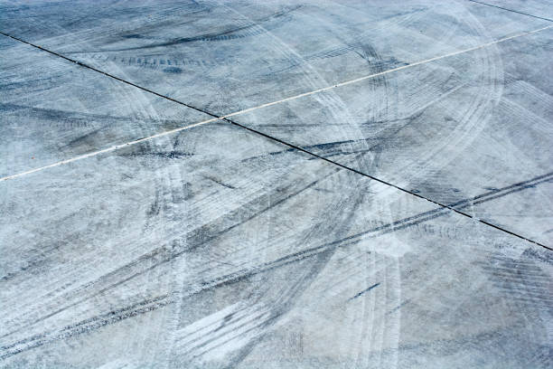
If you’ve ever seen annoying tire marks on your freshly painted garage floor, you’re not alone. Especially when a vehicle has just parked, the contact between hot tires and the garage floor often leaves unsightly marks. These marks, commonly known as “Hot Tire Pickup” (HTP), are more than just a surface issue—they often reflect a chemical interaction between the tire rubber and the floor coating. So, how exactly do these tire marks form? More importantly, how can you prevent them from appearing and extend the lifespan of your garage floor coating?
In this blog post, we will delve into the mechanism of heat-induced tire migration, analyze the relationship between rubber softeners, coating crosslinking density, and temperature resistance rating, and provide practical solutions for car owners on how to avoid tire marks and extend coating life.

What is hot tire migration, and how does it occur?
Chemical mechanisms of hot tire migration
Heat migration refers to the sticky tire marks left when car tires, as their temperature rises, soften their rubber and come into contact with garage floor coating. These marks are formed due to the adhesion between the tire rubber and the floor coating. As the tire heats up from driving, the rubber softens, allowing it to chemically react with the garage floor coating, making it easier for the softened rubber to adhere to the coating surface. When the vehicle leaves, the tire residue remains on the floor, forming marks.
Tires are typically made from a blend of natural and synthetic rubber, materials that often contain softeners. These softeners are generally oils or resins that help improve tire grip and durability but can also cause problems when in contact with garage floor coating. When tires are heated, these softeners become more fluid, increasing their adhesion to the Garage Floor Coating. Tire mark-resistant coatings are designed to resist this adhesion reaction by strengthening the crosslinking agents or modifying the molecular structure, thereby reducing tire mark formation.
Factors contributing to heat-induced tire migration
- Tire composition: Tire rubber often contains softeners, plasticizers, and oils, which make tires softer and enhance grip. However, when these components react chemically with certain coatings, they can leave tire marks on garage floors.
- Coating Properties: Not all garage floor coatings are resistant to heat-induced tire migration. Some coatings are more heat-resistant, while others are more susceptible to damage from tire contact. Key factors determining a coating’s susceptibility to heat-induced tire migration include the coating’s crosslinking density, temperature rating, and overall chemical structure.
- Temperature and pressure: The temperature of the tires and the pressure exerted by the vehicle on the floor play a crucial role in the formation of tire tracks. Tires are especially hot in warm weather or after long periods of driving, increasing the risk of hot tire migration.
Crosslinking density and temperature resistance
The crosslinking density of a coating refers to the degree of bonding between polymer chains. A higher crosslinking density results in a harder and more durable coating but also greater resistance to tire penetration. In contrast, coatings with lower crosslinking densities are more flexible and more prone to deformation under high temperatures and pressure, leading to heat-induced tire migration.
Temperature resistance is another key factor. Many garage floor coatings, especially epoxy coatings, may not withstand the high temperatures generated by tires. Coatings with poor temperature resistance may soften or deform at high temperatures, making tire marks easier to form. The best garage floor coatings for high-temperature environments and hot tires are those with higher temperature resistance and a higher cross-linking density, which effectively prevents heat-induced tire migration.
How to avoid tire marks on garage floor
Choose the appropriate garage floor coating.
One of the most effective ways to avoid tire marks is to choose a garage floor coating specifically designed to resist heat-induced tire migration. Here are some characteristics to consider when making your selection:
- High crosslinking density: Coatings with higher crosslinking density have better durability and resistance to heat-induced tire migration. For example, polyester coatings (polyaspartic coatings) typically have a higher crosslinking density than standard epoxy coatings, thus better preventing tire marks when in contact with hot tires.
- Enhanced temperature resistance: Some coatings are specifically designed to withstand high temperatures. If you are concerned about tire marks, you can choose a high-temperature-resistant coating, especially those hot tire issue fix coatings that are labeled as suitable for high-heat tires.
- Tire Trace Resistance Coatings: Some coatings on the market are specifically labeled “tire trace resistance.” These coatings typically use advanced resins that effectively resist chemical reactions with tire rubber softeners, thereby significantly reducing tire trace formation.
Keep the garage floor clean and maintained.
Regular maintenance can extend the life of your garage floor coating and prevent tire marks from appearing. Here are some tips for keeping your garage floor in good condition:
- Regularly clean the floors: Regularly remove dust, debris, and oil stains from the garage floor. These substances can react with the coating, making it more susceptible to damage and increasing the risk of tire marks.
- Use floor mats: Use rubber floor mats or carpets in the parking area to help absorb some of the heat from the tires and reduce direct contact between the tires and the coating.
- Avoid parking immediately after tires have overheated: If possible, avoid parking your car on a coated floor immediately after a long drive. Allowing the tires some time to cool down before parking significantly reduces the likelihood of hot tire migration.
Consider the correct curing time
The curing time of the coating is crucial to ensuring that the garage floor coating achieves maximum heat resistance and abrasion resistance. Many people start using their garage floors before the coating is fully cured, causing the coating to soften and making it easier for tire marks to show.
Curing time varies depending on the coating type and environmental conditions, but it is generally recommended to wait at least 48 to 72 hours after coating to ensure it is fully cured before driving the car into the garage. Follow the manufacturer’s instructions to cure the coating and avoid damaging it before use.
Regular inspection and recoating
Even the most durable coatings will wear down over time, especially on high-traffic garage floors. If you notice tire marks becoming more frequent or the coating becoming softer, it may be time to recoat your garage floor. Recoating restores its resistance to heat-induced tire migration and extends the floor’s lifespan.
Use additional sealant to protect the coating.
a garage floor coating that resists tire marks, you can apply an extra layer of sealant to further enhance the protective layer. The sealant provides additional protection against damage from oil stains, dirt, and tire marks. Choosing a high-quality garage stain control sealant that is compatible with your existing coating will provide even more durable protection for your floor.
Reduce tire marks and extend coating life
Tire marks are a common problem on garage floors, but with proper preparation and maintenance, their appearance can be completely avoided or minimized. Choosing the right garage floor coating, keeping your garage floor clean, and taking effective protective measures will keep your garage floor in good condition for a long time.
If you need more advice on how to protect your garage floor, or want to learn more about garage floor coating,


