How to prevent blistering and peeling of garage floor coating

As moisture slowly rises from the cracks in the floor, the air inside the garage becomes somewhat damp. Occasionally, you can hear a faint “hiss” as wheels roll over the ground—not the sound of asphalt, but a sign that the floor coating is loosening. Some people don’t realize that the once-shiny protective barrier has been under invisible pressure until obvious bubbles appear in the garage floor coating and the edges peel up.
Bubbling and peeling are rarely “sudden disasters,” but rather the result of a series of accumulated small mistakes. Moisture, temperature differences, construction negligence, oil residue… if any one of these factors falters, the supposedly robust floor coating will become fragile. To ensure the true durability of your garage floor, understanding the root cause is crucial, and that’s the purpose of this article: to give you a clear understanding of why garage floor coatings bubble and peel and how to completely eliminate these troublesome phenomena.
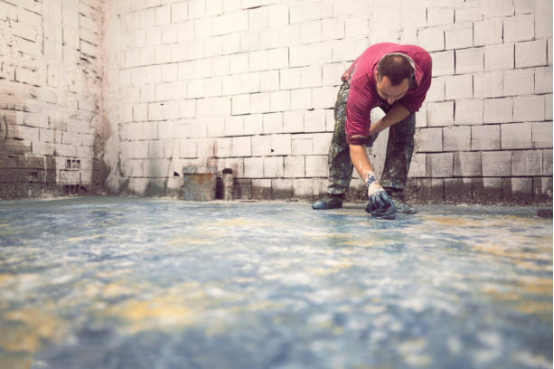
The causes of blistering on the ground are more insidious than imagined: moisture, temperature, and substrate issues are secretly driving the damage.
Many bubbling issues appear random, but industry technicians can often spot the problem immediately. Most garage floor coating projects overlook “invisible factors”—especially moisture content and temperature variations. Some real-world user feedback mentions that while the floor appeared dry on the day of installation, underground moisture was still rising; the trapped water vapor after the coating began to build pressure, causing bubbles to appear.
Moisture is the number one enemy.
When moisture is trapped between the floor and the garage floor coating, pressure will find a way to rise. Even slight unevenness in coating thickness or the presence of micropores in the ground that are difficult to see with the naked eye will cause air to bubble up. One of the industry’s commonly used methods for floor peeling prevention is to conduct an MVT (Moisture Transfer Rate) test before application to confirm whether the substrate is suitable for coating.
Temperature fluctuations can also cause bubbling.
Garages are enclosed spaces with more extreme temperature variations than indoor spaces: they are exposed to intense sunlight during the day and cool down at night, causing concrete to expand and contract more frequently. If the garage floor coating is not ductile enough, the originally tightly adhered coating will be torn into micro-cracks, eventually forming the “bubble-resistant structure” emphasized by bubble-resistant coatings.
Substrate contamination is significantly underestimated.
Accumulated chemical residues from old oil stains and tire tracks can cause garage floor coatings to lose adhesion. Industry reports frequently mention that nearly one-third of peeling cases stem from “inadequate cleaning leading to the loss of the invisible protective layer.”
Bubbling does not mean the garage floor coating is bad; rather, it means that some part of the system is loose.
Another aspect of the peeling problem: insufficient adhesion, over-sanding, or under-sanding can all cause the coating to peel off.
a coatingThe symptoms of peeling are more direct: the coating flakes off in patches, the edges lift up, and it looks like it has been scraped by a hard object. But the real reasons why coating “loses its grip” are not singular.
Insufficient sanding will prevent the coating from adhering to the surface structure.
Garage concrete floors are usually polished, resulting in a very dense surface. Coatings must rely on mechanical roughening to enhance adhesion. If sanding is inadequate, the coating will only remain on the surface and eventually peel off in large patches due to thermal expansion and contraction.
Conversely, excessive sanding can also weaken the stability of the floor.
In some cases, the floor is sanded down to a “felt” texture with too many holes, which absorbs excessive paint, resulting in an uneven coating structure and making it prone to “point peeling,” a common issue in garage floor repair.
Chemical factors can also disrupt adhesion.
Salt, detergent residue, and plasticizers on tires can all hinder the chemical bonding of the coating, causing the originally strong interlayer structure to gradually loosen over several weeks.
A construction team shared a common misconception: many people think that “rinsing with water is enough,” but contaminants can never be eliminated by water alone; they will adhere firmly to the inside of the micropores, becoming a barrier that the coating cannot penetrate.
The real test of stripping away the material lies in the meticulous management of the construction level.
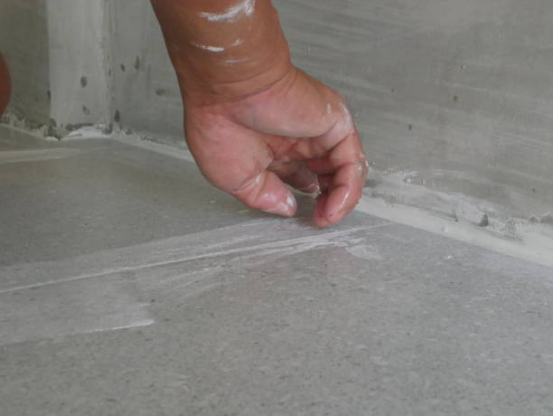
To ensure that a garage floor coating is resistant to foaming and peeling, the lifespan depends on everything from the details of its application to the frequency of maintenance.
coatingHigh-quality Garage Floor Coating doesn’t rely on the material itself to “shoulder everything”; it’s more like a system engineering project. Construction, floor condition, ambient humidity, and daily habits all affect the coating’s performance, and the key points for preventing blistering and peeling can be summarized in the following aspects.
First and foremost, a thorough ground inspection is essential: moisture content, density, and the presence of cracks must all be confirmed.
Professional teams routinely conduct humidity tests before construction, a step often overlooked by ordinary users. Moisture testing isn’t a tedious process; it’s a crucial step in preventing air bubbles. If the moisture content is high, improve ventilation or allow the ground to dry naturally, and if necessary, apply moisture-proofing measures.
Second, mechanical roughening allows the coating to truly “grind” into the ground.
The concrete must be ground to the appropriate “openness,” commonly CSP 2–3 (Concrete Surface Profile Grade). This creates a regular microtexture on the floor surface, allowing the coating to penetrate and cure, significantly improving adhesion and naturally reducing the chance of peeling.
Third, repair is an indispensable step.
Cracks and pits can become air pockets, a source of problems that bubble-resistant coatings must avoid in their design. Repair materials must be fully cured before application; otherwise, the coating will separate under stress, leading to blistering later.
IV. Application Temperature and Time Affect Coating Stability.
Coatings need to cure within a specific temperature range. Too low a temperature will prolong the curing time, while too high a temperature will cause the coating to lose water too quickly. Both can lead to uneven adhesion. Special attention should be paid to the weather when applying coatings to garages, as garages are closest to the outdoors and experience the most direct temperature changes.
Once these foundations are firmly established, the coating can demonstrate its structural toughness, rather than relying on luck to maintain its appearance.
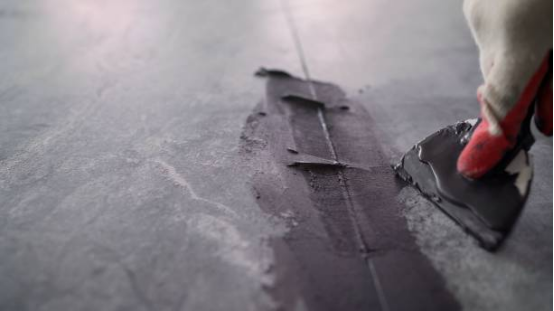
Post-maintenance is not complicated, yet it effectively prevents hidden damage.
garage floor coatingMany people believe that Garage Floor Coating requires no further attention after it has cured, but truly durable coatings depend on a well-managed maintenance routine.
Regular cleaning protects the coating from chemical corrosion.
It’s not a complicated process; simply removing oil and salt stains promptly prevents chemical residues from forming “stripping zones” on the floor. This is especially important in winter-affected areas where road de-icing salts can accelerate floor corrosion.
Avoid prolonged water accumulation.
While water accumulation won’t immediately damage the coating, if water remains in the same area for an extended period, moisture will trap in the surface micropores, increasing the risk of future bubbles.
Rubber tire marks should be removed regularly.
Tire plasticizers are a significant factor in coating peeling. As long as the surface is kept clean, the coating’s structural stability can be maintained at a high level.
.If you’d like to learn more about structural maintenance techniques, you can preview our related content—the Garage Floor Coating Guide .
To ensure the long-term stability of your garage floor coating, start by understanding the issues.
The appearance of bubbles and peeling is not a problem with the materials but rather a small deviation in the system itself. Moisture, temperature difference, surface contamination, construction negligence… these seemingly minor factors can be magnified infinitely in the complex environment of a garage.
With thorough preliminary inspections, proper process steps, and a reasonable maintenance schedule, a single-layer garage floor coating can remain stable despite daily wear and tear, vehicle traffic, and climate change.
Perhaps you’re currently planning to renovate your garage floor, or maybe you’ve already encountered bubbling or peeling. It’s worth revisiting your entire process to see if any steps were overlooked. Truly durable coatings are never built on luck, but on understanding and managing problems.


