
Table of Contents
When deciding to install flooring in their garage, many people envision reflective surfaces like those in Ferrari showrooms or the enviable dust-free garage of their neighbor.
I know that impulse all too well. You look at the cement floor covered in dust and oil stains, and you just want to immediately pour a bucket of paint over it to cover it up.
But before you apply your first coat of epoxy, as a veteran who has seen countless “regretful” cases in this industry, I have to throw some cold water on you. Creating a high-quality garage floor coating is like giving your garage floor a “tattoo.”
Tattoos are cool, but have you ever thought about the pain of getting them removed?
Most consumers, and even some irresponsible contractors, intentionally or unintentionally overlook a harsh reality: this process is irreversible. Once the resin seeps into the pores of the concrete and hardens, your garage floor will never be the same again.
Today, we’re going to talk about how much you need to pay to end a relationship when you get tired of it or it starts to crumble.
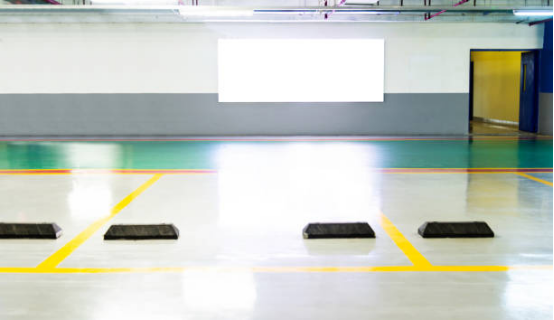
Physical fusion: Why is it more than just a layer of “paint”?
First, we need to dispel a common misconception: garage floor coating is neither a sticker nor ordinary wall paint.
In a standard construction process (especially with professional epoxy or polyurea systems), the first step is always “diamond grinding.” We use planetary grinders weighing hundreds of pounds to grind the originally smooth and dense concrete floor down to the roughness of 80-grit sandpaper.
Why do this? To open up the “pores” of the concrete.
When the liquid coating is poured on, it penetrates deep into these open capillaries, like tree roots, reaching depths of several millimeters. Once the chemical cross-linking reaction occurs and the coating cures, it becomes an integral part of the concrete. This is called “mechanical interlock.”
What does that mean?
This means that if you want to remove it in the future, you can’t simply “scrape it off.” You have to grind away the concrete skin containing the coating, flesh, and blood.
Industry insider secrets revealed: Many DIY kits advertise “only acid washing is needed for application,” but this is a fallback plan. Acid washing has very poor adhesion, and it will peel off in large patches after two years. However, if you are doing genuine industrial-grade flooring, its grip is over 400 PSI—this even exceeds the tensile strength of concrete itself. In other words, if you forcibly pull it off, the cement chunks will come off before the coating does.
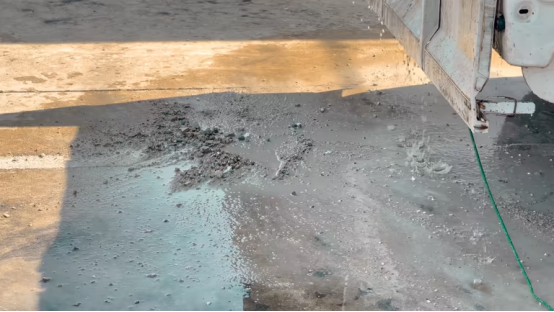
The cost of removal: dust, noise, and hefty bills.
Let’s imagine this scenario: You bought a used house, and the previous owner did a bizarre bright purple garage floor coating, or your DIY flooring done five years ago has become patchy, and you want to replace it.
Welcome to Nightmare Mode for removing garage floor coating difficulty.
This is definitely not a task that can be done in a weekend DIY session. Ordinary household handheld grinders simply cannot grip industrial-grade epoxy resin. It softens and becomes sticky when heated, instantly clogging your grinding wheel.
You’ll need to rent an industrial-grade floor stripper equipped with special PCD (polycrystalline diamond) blades. The sound? It’s the scream of metal frantically tearing through stone, decibels loud enough to pierce your eardrums. The dust? Even with an industrial vacuum cleaner attached, fine white powder will seep into every crevice of your garage—your toolbox, your bicycle chain, even the hinges in your door.
But here’s a detail that most people overlook: the cost of removal is usually twice the cost of installation.
Yes, you read that right. Installation might only cost $4-$6 per square foot, but contractors often quote much higher prices for removal. This is because PCD cutters wear out extremely quickly (a set of cutters costs several hundred dollars) and are extremely labor-intensive.
If you’re hesitating about taking this step or looking for a reversible alternative, consider this first:
Compare the advantages and disadvantages of removable garage flooring versus coated systems.
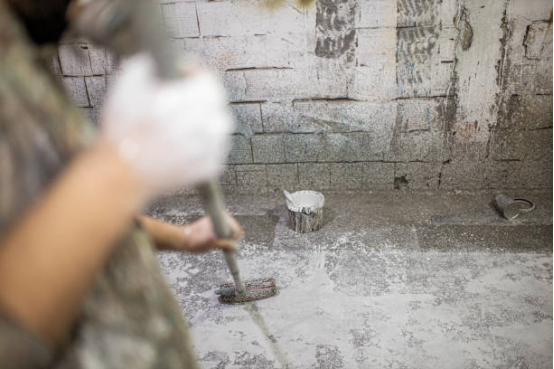
The “disfigured” ground: You can never go back to bare cement.
This is the most heartbreaking part.
Let’s say you spent a lot of money to finally grind down the old garage floor coating. What would you expect to see? A clean, bare concrete floor?
Stop dreaming.
What you’ll see is a scarred, pockmarked surface. Due to the violent grinding and stripping, the dense cream layer of the concrete surface has completely disappeared. What’s exposed is a loose aggregate layer, with a surface roughness (CSP) typically reaching level 3 to 4.
This type of ground is extremely ugly, absorbs water and oil very quickly, and produces a lot of dust.
This means that once you remove the old coating, you only have two options:
Apply another coat: You’re forced to do a new coat to cover it again. You’re stuck in an endless loop.
Expensive polishing: Want to restore a smooth cement finish? You’ll need up to 7-8 steps of concrete curing and polishing, which costs much more than applying a coating.
Therefore, the moment you decide to install garage floor coating, you have essentially given up the right to have a “normal concrete floor.”
FAQ (Frequently Asked Questions)
Q1: Can the new coating be applied directly over the old garage floor coating?
A: Yes, but it depends on the adhesion of the old coating. If the old coating has peeled or blistered in large areas, it must be completely removed. If the old coating is still firmly attached, but the surface is worn or you don’t like the color, then you can simply do “scuff sanding” to remove the gloss layer and then apply a new topcoat directly. This is the most cost-effective way to renovate.
Q2: Since removal is so difficult, will chemical strippers work?
A: I strongly advise against using chemical paint remover to treat large areas of your garage. Industrial paint removers contain highly toxic or corrosive ingredients such as dichloromethane, making their use in an enclosed garage extremely dangerous. Furthermore, the dissolved epoxy resin turns into a difficult-to-clean, sticky goo, and dealing with this toxic waste is far more troublesome than sanding dust. For removing garage floor coating difficulties, physical polishing remains the mainstream method.
Q3: Can laying tiles directly cover the old coating?
A: The risk is extremely high. Tile adhesive (Thinset) relies primarily on the penetration of cement components to hold the tile. Old garage floor coating is a smooth plastic layer that tile adhesive struggles to adhere to. If you want to lay tiles, you either need to grind off the coating or use an extremely expensive specialty epoxy tile adhesive; otherwise, it’s only a matter of time before the tiles become hollow and fall off.
Q4: Which flooring solutions are “reversible”?
A: If you don’t want the lifelong responsibility, interlocking tiles are the best option. Products like RaceDeck or SwissTrax are laid directly on concrete floors without glue. When you move or want to change your style, you can simply remove them and take them with you, leaving the concrete floor underneath intact.
Conclusion
Garage floor coating can indeed greatly enhance the appearance and functionality of a garage, providing dust protection, wear resistance, and easy cleaning. I also had polyurea flooring installed in my own garage.
But I expect you to make a choice based on a fully informed decision before swiping your card.
You need to understand that this is not just a renovation; it’s a permanent alteration to the physical properties of the house’s original structure. While you enjoy its newfound beauty, be prepared to bear the cost of its “easy to acquire, difficult to deliver” nature.
If you plan to live here long-term and are willing to maintain it, then go for it. But if you just want to get a good price for the house, or if you’re someone who likes to tinker and upgrade, perhaps a nice, removable floor mat would be a wiser choice.
After all, in this world, some decisions, once made, leave a trace of regret that even diamond cannot erase.


