
Dust in the garage almost never appears as a “problem.” It’s more like a default, accepted background phenomenon—the fine dust kicked up by passing tires, the gradually darkening floor near the wall, and the layer of dust that reappears shortly after cleaning. Because this change is slow and continuous, many people have already psychologically adapted to it before they even realize something is wrong.
However, in most cases, this dust does not originate from the external environment but rather from structural changes within the concrete itself. Understanding this is the true starting point for discussing the long-term value of garage floor coating.
The causes of concrete dusting are not complicated, but the consequences are often underestimated.
From a materials perspective, concrete is not a completely dense entity but a composite material with a large number of micropores inside. During pouring, curing, and long-term use, if the water-cement ratio is not properly controlled, surface curing is insufficient, or it is subjected to tire friction and humidity changes for a long time, the top layer of cement paste may begin to lose its bonding strength.
This change doesn’t immediately manifest as obvious damage but rather occurs quietly through the continuous release of fine particles. Initially, there’s only slight sanding, but then the dust is continuously carried off the ground by daily walking, vehicle traffic, and airflow, gradually spreading throughout the entire space.
Many users tend to clean more frequently at this stage. However, the reality is that cleaning itself cannot prevent dust generation and may even inadvertently accelerate surface wear. This is why dusty garage floor solutions often fall into a cycle of “the more you clean, the dirtier it gets”—the root of the problem is never the dust itself, but the continuous source of dust.
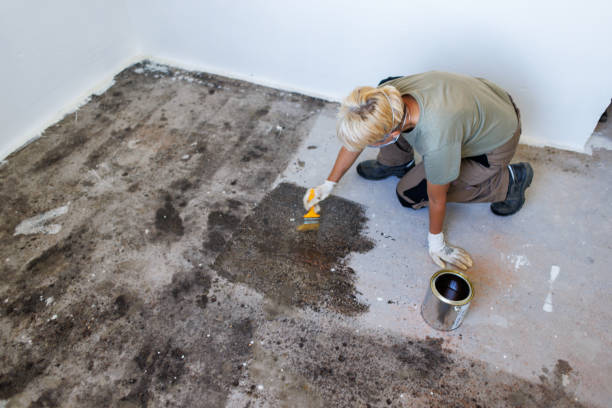
The core value of Garage Floor Coating lies in altering the dust release mechanism.
In non-professional contexts, garage floor coating is often simply understood as a surface decoration method, but from an industry perspective, its real function is not reflected in appearance but in the reshaping of the concrete surface structure.
An effective floor coating system typically achieves a stable bond with the concrete surface through three stages: penetration, curing, and sealing. Once the coating material enters the previously open capillaries, it locks in loose particles during the curing process, thereby cutting off the path for dust to diffuse into the air.
This change in mechanism means that garage floor coating dust control is not a short-term improvement but a long-term adjustment. Unlike simple cleaning or localized repairs, the sealed floor no longer continuously generates dust, and the dust source is controlled within a manageable range.
Many users only gradually realized the changes after several months: cleaning frequency decreased, floors no longer quickly became dusty again, and dust accumulation in corners and on device surfaces slowed significantly. This feedback, while not exaggerated, was remarkably consistent, precisely illustrating the differences at the mechanism level.
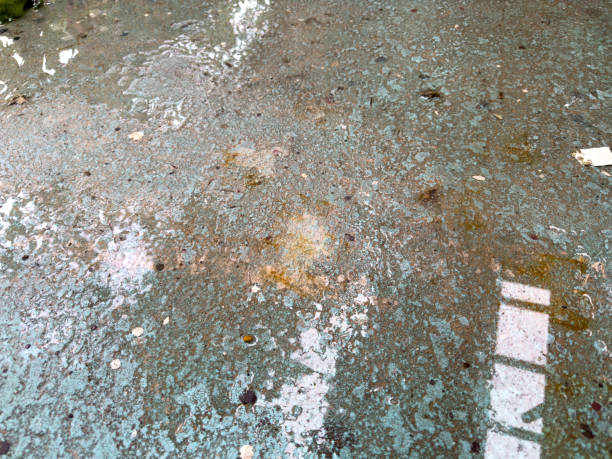
The impact of dust reduction on indoor air quality is often overlooked.
Garages are often considered functional spaces outside of residences, so their air quality is rarely discussed separately. However, in actual building structures, garages and living areas are often weakly connected through door gaps, ventilation systems, or structural gaps, which means that dust is not completely confined to a closed area.
Concrete dust particles are small in size, easily suspended, and move with airflow. Their alkaline components can also irritate the respiratory tract. When the dust source persists for a long time, even if users do not frequently stay in the garage, airborne settling particles can gradually diffuse into adjacent spaces.
In this context, the significance of garage floor coating begins to transcend “clean floor” itself. By reducing the continuous release of dust, the air load in the garage environment also decreases. Although this change is not immediately perceptible, the difference will be evident over long-term use.
In some industrial and warehousing environments, similar ground enclosure measures have been shown to significantly reduce the total amount of airborne particulate matter, and the same logic applies to residential or semi-open garage spaces.
Changing the cleaning method is often more important than the frequency of cleaning.
When concrete is in a sandy state, cleaning is often an antagonistic activity: sweeping stirs up dust, mopping leaves mud stains, and repeated friction accelerates surface wear. In this state, cleaning is more about “controlling losses” than about real improvement.
Once the floor surface is sealed, the cleaning logic changes. Dust no longer binds tightly to the substrate but remains on the surface in a more predictable way, making one-off cleaning possible. Many users only realize at this stage that what truly saves time is not more frequent cleaning, but reducing the problems with the floor itself.
This is precisely the core point that Dusty Garage Floor Solution has repeatedly emphasized in its long-term discussions: maintenance costs are not only reflected in current investments but also in continuous consumption in the future.
The value of dust control varies depending on the application scenario.
It is worth noting that the extent of the dust problem is closely related to how the garage is used. Residential garage owners are more concerned about whether dust enters their living space; work garage owners worry about the long-term effects of dust on equipment, tools, and precision; and users who use their garages as storage or activity spaces often have higher requirements for environmental stability.
In these scenarios, the role of garage floor coating is not a “one-size-fits-all solution,” but rather to provide a more stable foundation for different needs. Only when dust is no longer the default state can users reassess the functionality and possibilities of their garages.
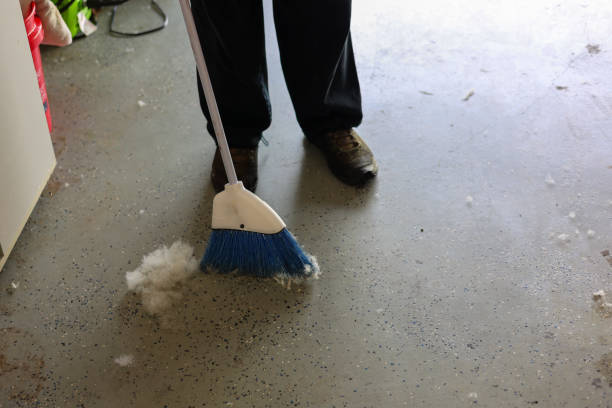
When dust is controlled, behavioral habits will also change.
Perhaps the most noteworthy change is not in the ground itself, but in people’s shift in attitude towards space. As dust decreases, many previously overlooked issues gradually emerge: do tools need better storage? Can the space serve more purposes? Is cleaning still a burden?
These changes are not dramatic, but they are real. They remind us that the long-term impact of garage floor coating is not a one-off improvement but a reset of the environmental state.
The dust problem is essentially a matter of time.
Concrete dusting doesn’t stop on its own, nor does the dust disappear into thin air. As long as the surface structure remains open, microparticles will continue to be released during daily use.
From sealing off surfaces and controlling diffusion to influencing air quality and cleaning schedules, garage floor coating brings about more than just isolated changes; it triggers a chain reaction. Perhaps the real question worth considering is, have we become accustomed to an environment that could have been more stable?


