Chemical Resistance Testing of Garage Floor Coating: When Oil, Salt Spray, and Time Become Enemies

Garage floor coatings are more than just about aesthetics—they serve as the first line of defense against oil spills, salt spray, and harsh chemicals. A garage floor coating must withstand constant exposure to automotive fluids, cleaning agents, and weather-related corrosion. Its chemical resistance is a critical performance indicator that separates short-lived coatings from truly durable systems.
This article explores testing standards, lab procedures, and real-world data on garage floor coating chemical resistance, showing the science behind coating durability—and helping you understand why true performance starts with verified protection.
Table of Contents
Chemical Corrosion Resistance Standards: Industry Benchmarks and Real-World Needs
In the U.S. and European markets, garage floor coatings are tested under recognized international standards such as ASTM and ISO, ensuring reliability under real-life conditions.
Common standards include:
- ASTM D1308—Determines coating resistance to chemical droplets, evaluating discoloration, blistering, and softening.
- ASTM B117 – Salt spray corrosion test, simulating winter road salt exposure.
- ISO 2812-1 – Liquid immersion and splash testing for evaluating long-term stability against grease, gasoline, and detergents.
For example, a salt spray test may last 500 hours, measuring how a coating performs under continuous exposure to corrosive environments. These standards reflect not just laboratory performance but also garage floor durability under daily wear and tear.
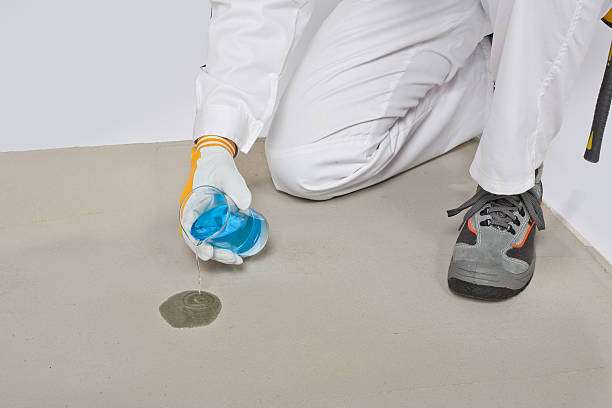
Experimental Methods: From Oil to Salt Spray—Comprehensive Testing of Garage Floor Coatings
To accurately evaluate chemical resistance, laboratories simulate a variety of chemical environments:
Oil Resistance Test
Motor oil, brake fluid, or coolant drops are applied to the coating surface for 24–72 hours. An excellent garage floor coating shows no swelling, peeling, or discoloration.
Salt Spray Simulation
—noThis test mimics road salt exposure using a 5% sodium chloride solution. After 500 hours, top-tier coatings maintain integrity — no cracking or blistering.
UV and Thermal Cycling
Coatings are exposed to UV light and temperature variations to simulate long-term wear. Hardness and gloss retention data reveal long-term chemical stability.
Multi-Liquid Cross-Contamination
Multiple automotive and household chemicals are applied simultaneously to evaluate the coating’s tolerance in a mixed environment. Reliable coatings resist softening or degradation within 72 hours.
These controlled experiments provide both scientific validation and practical references for consumers choosing garage floor coating systems.
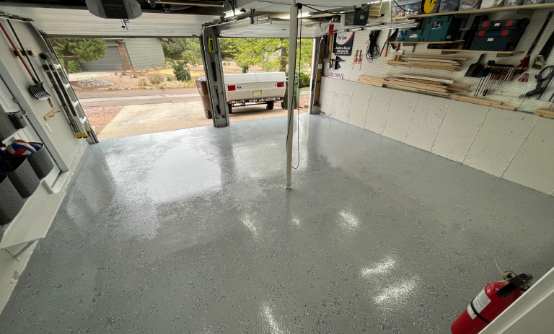
Experimental Results Analysis: Which Coatings Withstand the Test of Time?
The testing reveals key differences among coating types:
- Epoxy Garage Floor Coating—Excellent resistance to motor oil, gasoline, and mild acids/alkalis. After 500 hours of salt spray, surface gloss slightly reduces, but structure remains intact—ideal for heavy-use garages.
- Polyurethane Coating—Superior gloss and scratch resistance, though less stable under prolonged exposure to strong acids or bases. Best maintained through regular cleaning.
- Self-Leveling Acrylic Coating – Fast to apply with a smooth finish, but lower chemical resistance compared to epoxy and polyurethane. Best for low-traffic or decorative spaces.
DIY feedback confirms: even premium materials fail if substrate preparation or coating thickness is inadequate. Application quality directly affects long-term chemical durability.
Brand and Technology Insights: Choosing a Chemically Reliable Garage Floor Coating
When selecting a garage floor coating, consider both product data and the technical strength behind the brand.
Look for:
- Technical Documentation: Does it include verified data on oil, salt, and detergent resistance?
- Long-Term Reviews: Real-world feedback from users facing oil spills, salt corrosion, and household chemicals.
- Application Guidelines: Proper surface prep, coating thickness, and curing methods directly impact chemical resistance.
The latest trend is hybrid coatings (epoxy + polyurethane), combining high gloss with superior chemical and abrasion resistance—delivering professional-grade performance even for DIY users.
Conclusion: The Science Behind Long-Term Garage Floor Protection
Chemical resistance is a key indicator of the long-term performance of garage floor coatings. From oil and dirt resistance to salt spray testing and aging, scientific experiments have verified the true performance of different coating materials. This also reminds both DIY and commercial users that application techniques, substrate preparation, and coating thickness are equally important. By understanding the testing methods and experimental results, you can confidently select the high-performance coating that’s right for your garage.


