Garage Floor Coating Costs Debunked: The Truth Behind Every Square Foot

Walk into residential communities across North America, and you’ll notice a gradual shift from traditional gray concrete to high-gloss, wear-resistant, and colorful garage floor coatings. However, many consumers, before consulting or even installing a garage floor, are often confused by price: What exactly makes up the per-square-foot cost? This article breaks down the four core costs of materials, labor, substrate preparation, and ongoing maintenance, helping readers understand the long-term value of investment and providing an authoritative reference suitable for both homeowners and professional contractors. Garage Floor Coating Costs Debunked: The Truth Behind Every Square Foot
Table of Contents
Material Cost: The Price Logic of High-Performance Garage Floor Coatings
Materials are the most visible part of garage floor coating costs and a key factor affecting durability and visual effect. According to North American market data, the material cost of common epoxy flooring is approximately $3-$7 per square foot, while polyurethane or modified resin products can reach $6-$12 per square foot.
The cost differences mainly come from:
- Resin type and curing agent ratio: High solid content resins provide greater wear resistance but cost more than basic epoxy.
- Fillers and decorative layers: Colored sand, metallic powders, or pearlescent coatings add visual appeal but raise unit cost.
- Low-temperature and chemical-resistant formulas: Winter-ready coatings require specialized formulations that increase material costs.
Real-world projects show that high-end residential garages often use multi-layer self-leveling colored sand coatings, where material accounts for about 40% of total costs. While initial expenses are higher, the extended maintenance cycle makes these coatings more cost-effective over time.
Labor Cost: The Value of Professional Garage Floor Coating Application
Construction quality directly impacts the performance of garage floor coatings. Even the best materials can fail if improperly applied. Labor costs in North America typically range from $4 to $8 per square foot, depending on:
- Experience and qualifications: Professional teams minimize rework and ensure consistent application.
- Construction methods: Roller coating, self-leveling, or spraying affect labor intensity; self-leveling is more delicate and costlier.
- Environmental control: Low-temperature or high-humidity conditions require extra equipment and time.
Investing in skilled labor ensures the coating adheres correctly, reducing maintenance needs and extending the life of your garage floor coating.
Preparation and Foundation Processing: Hidden Costs of Garage Floor Coating
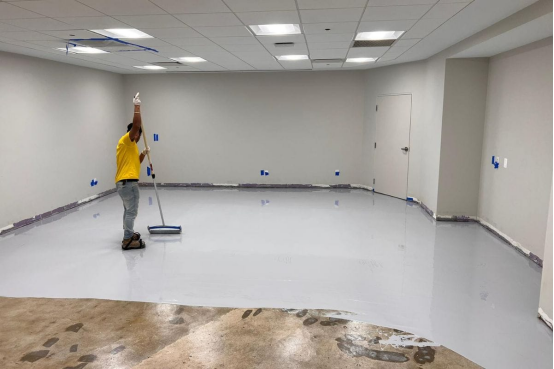
Many homeowners underestimate the impact of substrate preparation on coating longevity. Essential steps include:
- Concrete grinding or shot blasting: Removes oil, dust, and loose particles to improve adhesion.
- Crack repair and hole filling: Prevents peeling or cracking after coating application.
- Primer construction: Enhances bonding between concrete and coating, improving wear resistance.
These preparatory steps often account for 15–25% of total costs but directly affect both durability and aesthetics. Studies show garages skipping proper prep have a 30% higher damage rate after 2–3 years, while fully prepared floors last over 10 years.
Maintenance Costs: Maximizing ROI for Your Garage Floor Coating
A high-quality garage floor coating also requires maintenance to remain cost-effective. Key points include:
- Regular cleaning: Use a neutral detergent to prolong gloss and wear resistance (annual cost $0.5–$1 per sq ft).
- Scratch repair and local polishing: Timely repair prevents larger renovations.
- Environmental protection: Avoid prolonged exposure to ice, snow, saltwater, and chemicals; use mats when needed.
Scientific maintenance ensures that your investment in a garage floor coating continues to provide safety, aesthetics, and value over the long term.
How to Balance Cost and Value: Long-Term Garage Floor Coating Strategy
Understanding the four cost factors—materials, labor, preparation, and maintenance—helps establish long-term cost-effectiveness:
- Prioritize high-quality materials that are wear-resistant, chemical-resistant, and suitable for low temperatures.
- Choose professional construction teams to reduce rework and ensure performance.
- Implement scientific maintenance to extend service life and maintain visual appeal.
Feedback from North American homeowners indicates that high-end garage floor coatings, despite higher initial costs, result in lower total expenditures over a 7–10 year cycle while enhancing comfort, safety, and overall garage aesthetics.
Summarize
per square foot of garage floor coating goes far beyond the price of the materials. By breaking down the four key factors of materials, labor, substrate preparation, and maintenance, consumers can make a more informed investment decision based on long-term cost-effectiveness. By selecting materials, planning construction appropriately, and diligently maintaining the floor, you can not only extend the lifespan of your garage but also transform it into a long-term asset that enhances the overall value of your home.


