
Much of the content about garage floor coating focuses on aspects like “enhanced texture,” “easier cleaning,” and “more durable.” Reading too much of this can easily lead to the assumption that any garage floor coating is an upgrade.
However, this judgment doesn’t always hold true in real-world use cases.
garage floor coatingIn fact, the more professional and trustworthy an industry voice is, the less likely it is to avoid one question—when should a coating not be applied?
Understanding the boundaries of Garage Floor Coating is actually a key step in building trust and demonstrating professionalism.
,This article does not discuss selection or make product recommendations. Instead, it rationally breaks down the reasons why garage floor coating should not be used , starting from the usage environment, structural conditions, and behavioral patterns to help you determine which garages are not suitable for coating.
Not all concrete garages are suitable for coating.
In many contexts, “concrete garages” are considered a natural prerequisite for coatings. However, in the fields of construction and materials, this statement is actually too general.
.The real key is not whether it is concrete or not, but whether the concrete is stable .
Some of the issues that are repeatedly mentioned in industry forums and user case studies include:
- Moisture seepage from the ground has been a long-term problem.
- Concrete not fully cured or too young
- Numerous uncontrollable cracks exist in the base layer.
garage floor coatingIn these situations, Garage Floor Coating often performs worse than expected. It’s not that the coating itself is of “poor quality,” but rather that the substrate conditions do not support its long-term adhesion.
Especially in underground or semi-underground parking garages, moisture migration is a factor that is often underestimated.
When moisture continuously seeps upwards from the bottom, even if the surface looks intact in the short term, problems such as blistering and delamination are likely to occur later. Such cases are not uncommon in many real user feedback reports.
This is also the most basic, yet most easily overlooked, limitation of garage floor coating.
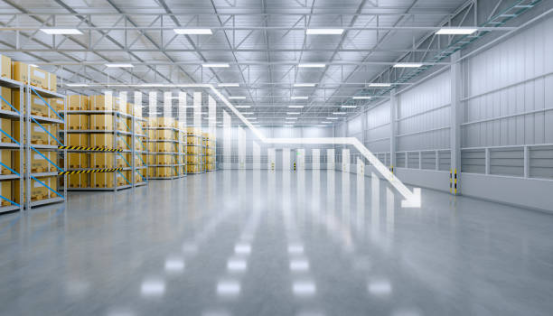
Temporary use or spaces with high flexibility are not suitable for coatings.
.Another easily overlooked dimension of judgment is the “certainty of use” of space .
Garage floor coatings are better suited for long-term, stable use. The cost-effectiveness and suitability of the coating are diminished if the garage is in any of the following conditions:
- Potential repurposing in the next few years
- Frequent structural or equipment adjustments
- As a short-term transitional or temporary storage space
properties orIn real-world cases, many users have opted for coatings in rental properties, short-term owner-occupied garages, only to find later, during renovations or relocations, that what was originally considered an “upgrade” had become a limitation.
.This doesn’t mean the coating is irreversible, but rather that any surface system, once established, assumes you’re willing to accept its long-term presence .
When the space itself lacks stability, the advantages of a garage floor coating are difficult to fully realize.
Under frequent heavy-load impact conditions, coating is not the optimal solution.
.In some articles, garage floor coating is often described as “more durable.” However, durability does not equate to suitability for all high-intensity scenarios .
For example:
- Frequent metalworking or heavy maintenance
- Repeated movement of high-load equipment
- A large number of hard objects falling is unavoidable
.In these environments, the coating faces not “wear,” but rather instantaneous impacts and concentrated stress .
Compared to continuous, uniform use, these impacts are more likely to cause localized damage.
.”Many industry experts point out that in such high-impact scenarios, exposed but repairable concrete is actually more “forgiving . “
Once the coating is damaged, the difficulty of localized repairs and the need for visual consistency become new problems.
Therefore, when analyzing when not to use garage floor coating, high strength does not equate to “more need for coating,” but rather requires more careful evaluation.
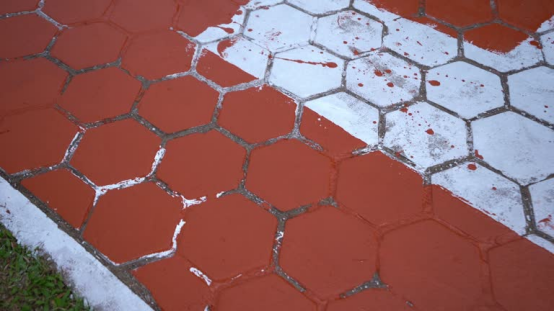
Users who are extremely sensitive to changes in appearance are actually at higher risk.
This is a real problem that few people point out directly, but it repeatedly appears in user experience.
Any garage floor coating will change during use.
This includes, but is not limited to:
- Gloss decreases over time
- Local wear marks
- Color difference or accumulation of signs of use
,For users who can accept signs of wear and tear, these changes are natural.
But if you have a high requirement for consistency in the appearance of your floor , the coating may not necessarily bring psychological satisfaction.
details andIn some real feedback, we can see this contrast:
Initially, people are very satisfied with the results, but as time goes on, they become more and more sensitive to changes in details, and even experience a psychological gap that makes it “more difficult to accept than before.”
This is also a limitation of the garage floor coating that is at the cognitive level rather than the technical level.

Spaces with stringent construction requirements are not ideal.
The effectiveness of a garage floor coating is highly dependent on the construction conditions. This is almost a consensus within the industry.
The following situations will significantly increase the probability of failure:
- Temperature and humidity fluctuate greatly
- Limited ventilation
- Unable to control the construction time window
In some older residential buildings or complex garages, these conditions are not entirely within human control.
Even if the materials themselves are suitable, an unstable construction environment can pose hidden risks.
.From a professional perspective, this isn’t a matter of “construction skill,” but rather that the space itself is unfriendly .
In this situation, choosing not to apply a coating is a rational decision.
A rational refusal is, in fact, a demonstration of professionalism.
.In many mature industries, the truly reliable solutions are often not those that “apply to everyone,” but rather those that clearly tell you where the boundaries lie .
The same applies to garage floor coating.
When we start discussing “unsuitable” scenarios, the value of coatings becomes clearer—
It is not a panacea but a system that performs well under specific conditions.
If you want a more systematic understanding of the adaptation logic under different garage conditions, some in-depth analysis of the usage boundaries of Garage Floor Coating can often provide a more complete judgment framework, rather than a simple “do or don’t do.”
FAQ: Common questions regarding scenarios where Garage Floor Coating is not applicable
Are all older garages unsuitable for garage floor coating?
Not at all. The key is the stability of the base layer, not whether it’s “new” or “old.” Some older but well-preserved concrete can be very stable.
Is it true that coatings can never be applied in a humid environment?
Long-term, uncontrollable humid environments pose a higher risk. The situation is different if the source of moisture is clearly identified and controllable.
Does the limitation of garage floor coating mean the coating is unreliable?
No. Every material and system has its applicable scope, and clearly defined limitations are precisely a reflection of reliability.
If the future use is uncertain, should coatings be abandoned entirely?
At the very least, caution is warranted. Uncertainty about the future use implies a lower acceptance of “long-term presence,” which conflicts with the logic of coatings.
Not every instance of “not doing” means missing out.
In the realm of consumer content, “upgrading” is often described as a one-way choice.
However, in real life, deciding what not to do is often more important than deciding what to do.
Garage floor coating is not suitable for all garages. This is not a flaw but rather the inherent limitations of a mature solution.
When you start seriously considering these “unsuitable” scenarios, you’ve actually taken a more professional stance.
Perhaps the real question isn’t “should we do it?” but rather—is
Is this space truly ready to accommodate it?


