Garage floor coating’s UV protection extends the lifespan of the floor.

Sunlight always leaves its mark silently. The light filtering through a half-open garage door, seemingly soft, can subtly alter the color and texture of the floor coating. Many families find their garage floor coatings glossy and substantial in the first year; however, after a few summers, the floor begins to yellow, darken, and even develop fine powdering. It’s not that the coating itself is faulty, but rather that ultraviolet radiation is stronger than expected. For a floor to truly “withstand the sun,” UV resistance becomes crucial.
To help more families understand why UV-resistant coating is more than just a marketing term, this article will break down the real impact of ultraviolet light on the coating, analyze how Garage Floor Coating maintains its color and strength under sunlight, and combine real industry experience to show you which design details are truly key to extending the life of your floor.
Table of Contents
What exactly are the effects of ultraviolet radiation on the ground?
Many people believe that discoloration of the floor is simply “aging” or “signs of use,” but industry technical data shows that UV-A and UV-B are the main causes of fading, chalking, and cracking in garage floor coatings.
Several typical phenomena are often misunderstood:
The first scenario: uneven coating color.
Areas exposed to direct sunlight begin to yellow, while shaded areas retain their original color, making it look like the ground has been painted with a “sunlight map.” This is most common with base floor paint finishes that lack epoxy UV protection.
The second scenario: loss of shine.
The originally smooth coating surface becomes slightly matte, and the feel is no longer as firm as before. Many users think it’s just dust accumulation, but if it remains dull after cleaning, it’s usually due to surface decomposition caused by UV molecules.
The third scenario: powdery peeling of the surface layer.
This step is actually a sign of “accelerated aging.” When the resin coating’s chain structure is damaged by ultraviolet light, chalking occurs. While seemingly minor, it causes the entire surface to lose strength much faster.
These changes don’t happen suddenly; they’re like sugar slowly dissolving—almost imperceptible, yet occurring month by month. And that’s why UV protection is by no means optional for true long-term users.
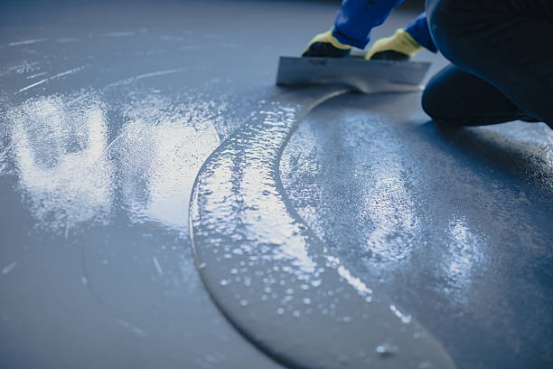
How UV-resistant Garage Floor Coating Really Works
A UV-resistant coating is not simply an added “sunscreen film”; its structure and composition have been specially adjusted. Common UV-resistant technologies in the industry generally come from three directions:
1. Light stability of the resin formulation
Good coatings incorporate UV stabilizers into the base resin. These stabilizers actively absorb energy when UV light comes into contact with the surface, preventing the coating’s chain structure from breaking. These stabilizers aren’t effective with just one coat; they must be fully integrated from the bottom up.
Unlike simple floor surface hardeners, UV stabilizers are usually more expensive and require more precise proportioning. Therefore, garage floor coatings that truly possess UV resistance are often classified as “high-performance systems” in the industry.
2. UV-shielding particles in the topcoat layer
Some coatings use nanoscale shielding materials, creating a protective layer on the surface that reflects ultraviolet rays. This doesn’t make the ground appear whiter, but it blocks sunlight before it reaches the resin structure.
This type of technology is common in the outdoor furniture and automotive paint industries. Its application in garage floors is precisely to address the home environment where garage doors are open and sunlight is constant.
3. Color Retention Technology
UV protection technology not only protects the material’s strength but also its appearance. Many users have reported that ordinary coatings tend to shift in color after about six months, especially light gray and light blue tones. Systems with epoxy UV protection, on the other hand, often maintain their original color even after three to five years.
The most obvious example in the industry is that some families only did garage floor coating on half of their garages. As a result, after a year, the sunlit areas were noticeably faded, while the shaded areas remained saturated, making the contrast very clear.
Why do some garages need UV protection more than other spaces?
You might be thinking: Garages are semi-indoor spaces; do they really need such strong sun protection?
But the truth is quite the opposite; garages are more susceptible to UV rays than any indoor area.
1. Reflected light is more “concealed” than direct light.
Concrete floors, gravel roads, and car hoods all reflect strong sunlight. Even if the garage door is only partially open, reflected light continues to hit the floor surface.
This “side-intrusion” of ultraviolet rays is harder to prevent and more likely to cause localized discoloration.
2. The material of the garage door can exacerbate the combined damage caused by temperature and ultraviolet radiation.
Metal doors, glass windows, and even skylights can all allow heat and UV rays to act on the coating simultaneously. This is common in real-world cases, especially in hot regions, where localized ground heating can accelerate photochemical reactions, doubling the aging process.
3. The garage is an area where people spend a lot of time.
When vehicles are parked for extended periods, the heat and oil from the vehicle body, along with trace amounts of chemicals from the tires, all contribute to the surface stability of the floor, in conjunction with ultraviolet radiation.
Therefore, the industry almost universally recommends that homes with sun exposure choose systems with UV-resistant coatings to extend the overall lifespan of their garage floor coatings.
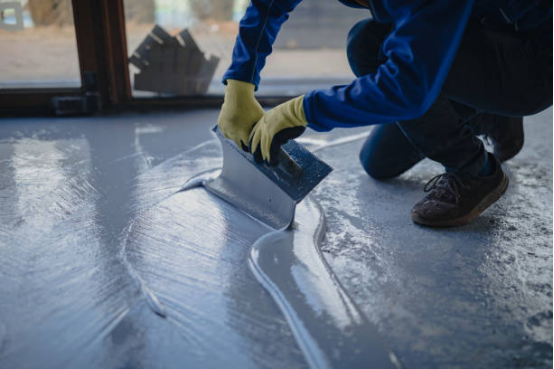
Key details to truly extend ground life
A single layer of UV-resistant coating isn’t enough; extending the lifespan of the surface also depends on usage habits and subsequent maintenance. Some seemingly insignificant actions can actually directly impact the results.
1. Keep the surface clean.
Dust, sand, and oil can accelerate the erosion of surfaces by sunlight. For example, sand rubbing against the surface makes it easier for ultraviolet rays to penetrate the coating. Therefore, simple, regular cleaning can extend the life of the surface.
2. Appropriate surface touch-up coating
Industry user experience shows that if a thin layer of clear UV-resistant topcoat is applied every 1–2 years, Garage Floor Coating can maintain its color for at least 5–7 years, even in areas with strong sunlight.
This maintenance is inexpensive yet highly effective.
3. Avoid using strong corrosive cleaning agents.
Some cleaning agents contain strong alkalis or solvents, which can weaken the UV stabilizers on the coating surface.
4. Choose a structure that can withstand high temperatures.
When sunlight causes localized temperature increases, low-performance coatings will soften and lose their gloss. UV-resistant products are usually also treated to enhance heat resistance; both work together to withstand the strong sunlight in summer.
How UV protection technology affects real user experience
The industry-standard test is QUV accelerated aging testing, which simulates light exposure by exposing the garage floor coating to high-intensity UV radiation for a short period.
Real user feedback is consistent with these test results.
- Garages using regular coating will show color differences after about a year;
- Garages using UV-resistant coating retain their original shine even after three years;
- Surfaces without epoxy UV protection are prone to chalking in sunny areas;
- Systems with UV protection offer more stable heat and sun protection, especially for dark-colored floors.
These experiences are not brand promotion but rather patterns summarized by industry engineers and consumers over many years of use.
garage floor coating.UV resistance is the true secret to the longevity of Garage Floor Coating.
The ability of a garage floor coating to withstand several summers is a good indicator of its professional UV protection. While
Sunlight may seem gentle, but it is the most persistent and subtle force driving floor aging. UV-resistant coatings don’t just extend the shine for a month or two; they extend the overall stability, durability, and visual consistency of the floor.
If you’re considering upgrading your garage floor, take a look at our extended content on Garage Floor Coating to learn which coating structures are better suited for homes exposed to strong sunlight.
Future sunlight will become increasingly unpredictable, but your flooring doesn’t have to age with it.
Would you want the lifespan of your garage to be in the hands of a high-performance coating? Perhaps it’s time to rethink the true needs of your garage flooring.


